
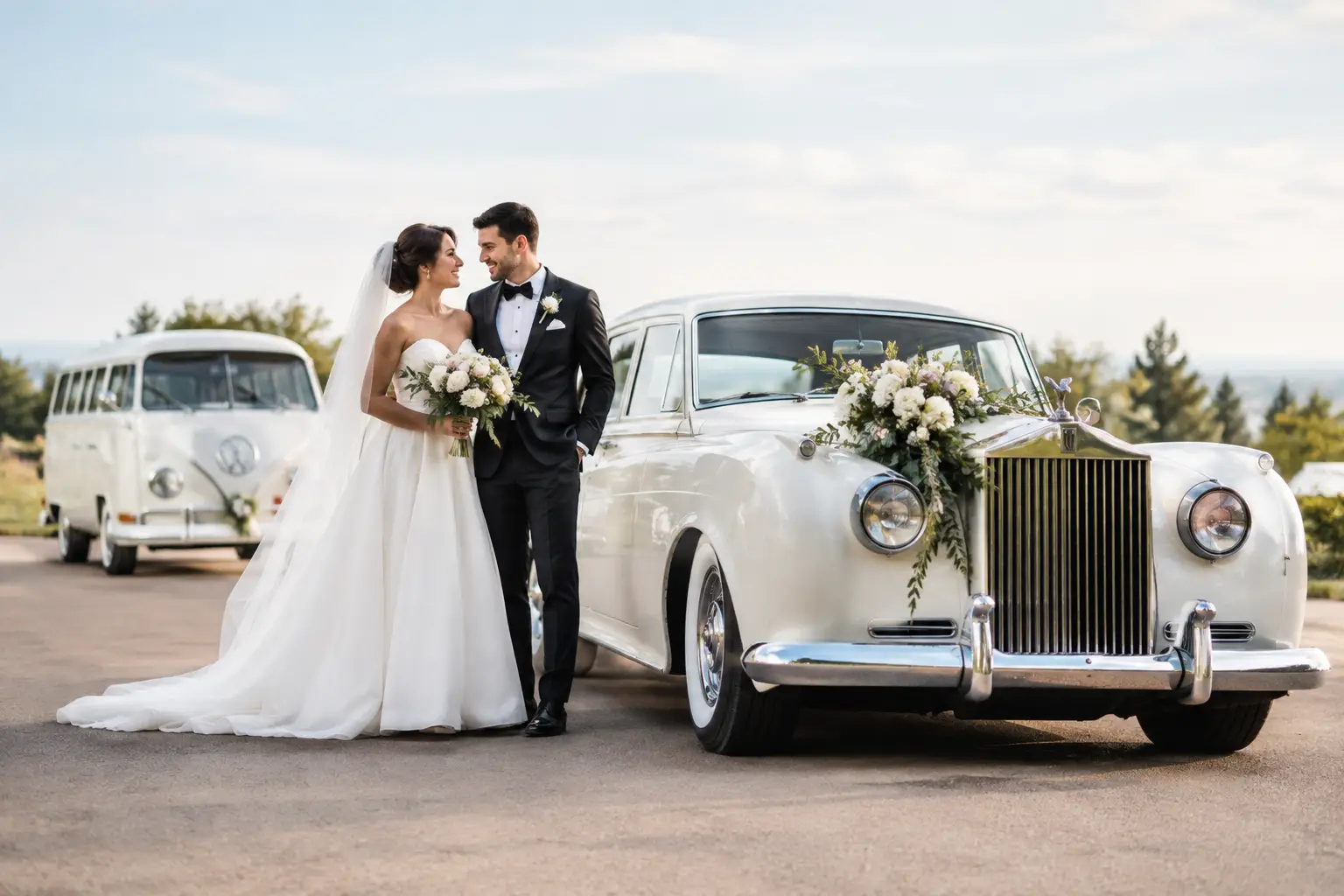
The best wedding transport ideas do more than create a good arrival photograph. They keep the morning calm, get key people to the right place on time and give guests a safe, comfortable way home after the celebration. The right choice depends on your venue, guest list, schedule and how much you want transport to feature in the day itself.
For a city-centre ceremony followed by a country-house reception, a discreet executive vehicle may be the most practical option. For a remote venue with limited parking, a planned guest shuttle can make far more difference than an elaborate bridal car. Start with the journeys that genuinely need managing, then choose vehicles that suit them.
The best wedding transport ideas begin with the schedule
Before looking at vehicle styles, map every journey from first pickup to the final departure. Include the couple, wedding party, close family, guests staying in hotels, suppliers who may need access and anyone with mobility requirements. A wedding timetable can look generous on paper, but hair appointments, photographs, traffic and venue access quickly reduce the margin.
Build in time for loading dresses, umbrellas, bouquets and overnight bags. A five-minute drive is rarely a five-minute transport task. For the couple, allowing 15 to 20 minutes between arriving at the ceremony venue and needing to be ready is usually sensible. It gives room for a calm entrance rather than a rushed handover at the kerb.
If your ceremony and reception are in different locations, use one person to own the transport plan. This could be the venue coordinator, wedding planner or a trusted member of the party. They should have the final itinerary, driver contact details and a clear list of who travels where.
1. Executive saloon for a polished, understated arrival
An executive saloon suits couples who want comfort, privacy and a smart arrival without making the vehicle the centre of attention. It is particularly effective for city weddings, registry offices and venues where access or parking is tight.
This option works well when the dress is not exceptionally wide and only two passengers need to travel. Ask about rear-seat space before confirming, especially if one person will be wearing a structured gown or carrying a long train. The benefit is a quiet, composed journey; the trade-off is limited space for attendants and luggage.
2. Luxury SUV for space, weather and country venues
A premium SUV provides a little more flexibility for wedding outfits, small bags and a second passenger. It can be a practical choice for rural venues, uneven driveways or a Scottish wedding where wet-weather plans need to be realistic.
Do not assume that a larger vehicle automatically means easy access for every dress. The height of the step, door opening and seat shape all matter. If possible, inspect the vehicle or discuss the outfit with the transport provider in advance. A well-chosen SUV is practical without feeling utilitarian.
3. Classic car for the ceremony entrance
A vintage or classic car gives the journey a defined sense of occasion and can become a memorable part of your photographs. It is best treated as a styling choice first and a logistics solution second.
Older vehicles may have less luggage capacity, restricted rear-seat room and fewer options if there is a mechanical problem. For a longer journey or winter wedding, many couples use a classic car for the short ceremony arrival and arrange a modern vehicle for later travel. That combination protects the look of the day without sacrificing comfort.
4. A matching pair for both partners
Separate cars can make sense when each partner is getting ready in a different location, or when you want both arrivals to feel equally considered. Matching executive vehicles create a cohesive look without the formality of a large wedding convoy.
The key is timing. Avoid scheduling both cars to reach the entrance at exactly the same moment unless the ceremony format calls for it. Give each driver a precise pickup point, route and arrival window, then allow for one vehicle to wait discreetly nearby if plans change.
5. Minibus for the wedding party
A minibus is one of the most useful options when bridesmaids, groomsmen or close family are travelling together. It reduces late arrivals, avoids a line of parked cars outside the venue and means the group starts the day together.
It is not always the most glamorous-looking choice, but it can be the most effective one. Consider using a premium car for the couple and a quality people carrier or minibus for the party. Everyone has a clear role in the plan, and no one is left trying to navigate unfamiliar roads in formalwear.
6. Guest shuttle between hotels and the venue
For guests unfamiliar with the area, a return shuttle is often more valuable than another decorative vehicle. It is especially helpful when the reception is outside town, parking is limited or drinks will be served throughout the evening.
Set two or three clear departure times rather than asking drivers to make individual return trips. Tell guests exactly where to meet, when the final shuttle leaves and whether they need to reserve a seat. A simple, reliable plan prevents the end-of-night uncertainty that can affect an otherwise well-run celebration.
7. Coach hire for larger guest groups
A coach is the practical answer for a large group travelling from one central pickup location. It can reduce parking pressure, support guests who do not drive and keep the ceremony start on schedule.
This is not the right choice for every wedding. A coach needs suitable access, turning space and a realistic pickup point. Check road width, gates and venue approaches before booking. For older properties and rural locations, these details matter more than the seating capacity advertised.
8. Vintage bus for a sociable journey
A vintage bus offers character and lets guests travel together, making it a strong fit for a relaxed celebration with a short, straightforward route. It can also look excellent in photographs.
However, it is less suited to steep, narrow or remote routes, and accessibility may be limited. It is worth considering a standard accessible vehicle for guests who need it, rather than expecting one form of transport to work for everybody.
9. Electric vehicle for a quieter modern wedding
An electric executive car can suit couples planning a contemporary, lower-impact celebration. It offers a quiet cabin and a refined arrival, particularly for urban venues.
The practical question is charging and range, not appearance. For local journeys this is rarely difficult, but a full-day hire involving several locations needs proper planning. A professional provider should confirm that the itinerary is realistic without relying on uncertain charging stops.
10. Accessible transport that is planned, not added later
If a guest uses a wheelchair, has limited mobility or finds long walks difficult, arrange suitable transport from the outset. Accessibility is not just about vehicle entry. Consider drop-off distance, paths, steps, toilet access and whether the venue has staff available to assist.
Speak directly with the guest where appropriate. They will usually know what makes travel comfortable and dignified. A thoughtful plan means they can take part fully, rather than having to manage an improvised solution on the day.
11. A late-night car for the couple
The final journey is easy to overlook. By the end of a long day, the couple may be tired, carrying gifts or heading to a hotel after guests have departed. A pre-booked private car gives the day a calm finish and avoids waiting outside in formalwear.
Confirm the collection point with the venue, particularly if the main entrance will be closed or the party moves to a different room. A fixed pickup time can work well, but a flexible collection window is often better if speeches or dancing run late.
12. A wet-weather backup that still feels considered
Rain does not spoil a wedding, but it changes how transport works. Covered pickup points, umbrellas, a vehicle close to the entrance and enough time to get in and out carefully make a noticeable difference. This is particularly relevant for dresses with long hems, elderly relatives and venues with gravel paths.
Ask your provider what happens if roads are affected by severe weather or an unexpected closure. A reliable plan includes route knowledge, contactable drivers and enough time to adapt without drama.
Questions to settle before booking wedding transport
Confirm passenger numbers, vehicle capacity, pickup addresses, route timing, waiting time and the final drop-off. Ask whether the quoted price includes all scheduled stops and any additional time needed for photographs. Transparent pricing is valuable because wedding days rarely follow a timetable to the minute.
You should also ask who will coordinate changes on the day and how the driver will identify the correct passengers. A professional, licensed driver with a confirmed itinerary offers a very different experience from trying to arrange several taxis at short notice.
For couples who want discreet, well-presented transport for key journeys, AlbaGo can help plan a dependable private hire itinerary around the shape of the day. The best choice is rarely the most extravagant vehicle. It is the one that gives you, your family and your guests confidence that every important journey is already taken care of.
Ready to book your journey?
Private chauffeur transfers and Highland tours from Edinburgh, booked online in minutes.
Book Online Instantly