
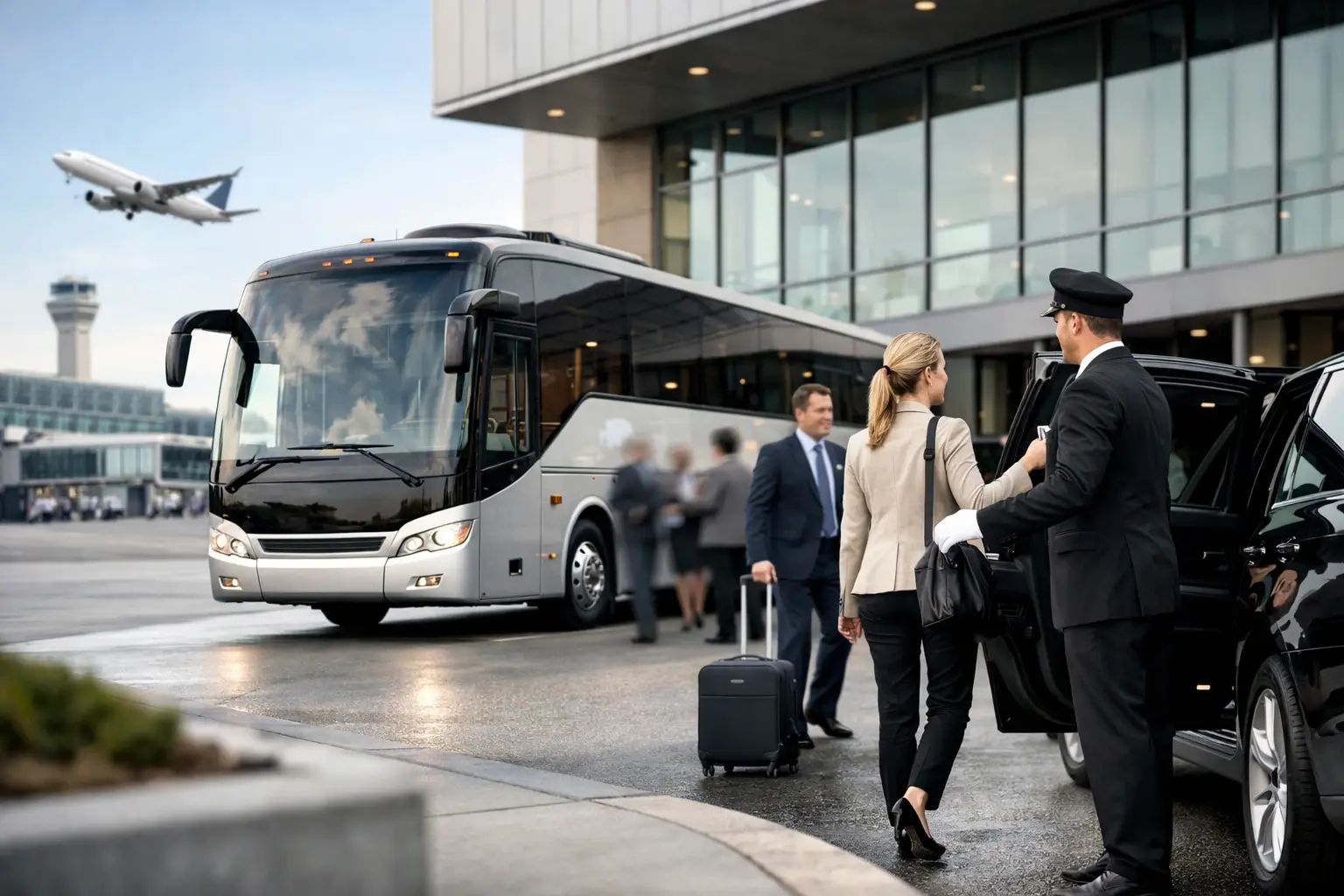
A conference agenda can be perfectly timed on paper and still lose momentum before the first speaker begins. One delayed arrival, a coach sent to the wrong entrance or a queue of delegates searching for transport after dinner can affect the whole experience. Effective conference transport planning treats travel as part of the event operation, not a last-minute booking task.
For organisers, executive assistants and corporate teams, the objective is straightforward: people should arrive calm, on time and clear about where they need to be. Achieving that requires more than counting seats. It means matching vehicles, routes, timings and communications to the realities of the venue and the people attending.
Start conference transport planning with the event timetable
Begin with the moments where travel has consequences. These are usually airport or rail arrivals, hotel-to-venue journeys, off-site activities, evening functions and departures. Work backwards from the time delegates need to be in their seats, rather than the published start time. A 9.00 am opening session may require arrivals from 8.15 am to allow for registration, security, coffee and informal introductions.
Build in a realistic buffer at each stage. City-centre traffic, luggage collection, large venues and unfamiliar entrances all take time. The appropriate allowance depends on the location, time of day and size of the group, but a schedule with no contingency is a schedule that assumes nothing will change.
It also helps to separate fixed movements from flexible ones. A speaker travelling from a hotel to a keynote should have a dedicated, clearly timed journey. Delegates arriving across several trains may be better served by short collection windows, with contingency arrangements for late arrivals. Treating every passenger movement in the same way can either create unnecessary cost or leave priority travellers exposed.
Map the full passenger journey
The vehicle journey is only one part of the experience. Confirm where passengers will meet their driver, which entrance they will use and how they will identify the right vehicle. At larger hotels and conference centres, the main address is not always the correct pick-up point.
Ask venues practical questions early: Is there a designated drop-off bay? Can vehicles wait on site? Is coach access restricted? Are there loading times, security checks or one-way systems? If the event includes a gala dinner or a venue outside the city centre, check the collection point after dark as carefully as the daytime arrival point.
A concise movement plan should record the collection address, named entrance, scheduled time, passenger contact, destination, vehicle requirement and event contact. It gives everyone one version of the plan and reduces reliance on hurried phone calls on the day.
Choose transport by passenger need, not just headcount
A single vehicle type rarely suits every part of a conference. Senior speakers may need privacy and a direct route. A small leadership group may need space to prepare for a meeting en route. Delegates travelling together may value an efficient shared transfer, while guests with mobility requirements need suitable access and enough time to board comfortably.
This is where the trade-off between efficiency and flexibility matters. Grouping passengers lowers the number of vehicle movements, but it can make the schedule vulnerable when one flight is late or one attendee is delayed in registration. Dedicated vehicles cost more, yet may be the sensible choice for key speakers, hosts or clients whose arrival cannot be compromised.
Vehicle capacity should include luggage, not just people. Conference guests arriving from overseas or continuing to a hotel may have larger cases, presentation materials or equipment. A vehicle that technically seats the group can still be unsuitable if the luggage arrangement is tight or compromises comfort.
For premium events, presentation also matters. A professional, licensed driver, a clean executive vehicle and clear confirmation details send a consistent message before delegates reach the venue. That is particularly relevant when welcoming investors, board members, guest speakers or valued clients.
Create arrival windows that people can follow
Delegates do not need an operations manual. They need simple instructions delivered at the right time. Send transport details early enough to be useful, then repeat the essential information shortly before travel.
Each message should state the pick-up time, exact meeting point, destination, expected journey time and a contact number for urgent issues. Where a driver is meeting someone at an airport or station, explain the meeting procedure plainly. Avoid vague wording such as “outside arrivals” when there are several exits or meeting zones.
For larger groups, designate one event transport contact who can make decisions. Drivers should not have to seek approval from several colleagues when a passenger is missing, a venue access point is closed or a return journey needs adjusting. A clear escalation route protects both the timetable and the passenger experience.
Plan for changes without encouraging confusion
Delays happen. The value of a transport plan is measured by how it responds when they do. Keep a live list of passenger movements, with arrival numbers where appropriate, and identify which journeys are genuinely time-critical.
If a flight delay affects one delegate, the answer may be a revised collection time. If it affects a group, it may require splitting the group, reallocating vehicles or moving a later journey forward. Do not wait until the original pick-up time to make that decision.
Good contingency planning includes a modest reserve of time and capacity, but it should remain proportionate. A small conference may only need a named transport provider who can respond to changes. A multi-venue event with executive guests may justify a dedicated on-site coordinator or standby vehicle. The right approach depends on the cost of disruption, not simply the number of attendees.
Coordinate venue teams, hotels and transport providers
Transport often fails at the handover between organisations. The hotel believes the venue has issued directions; the venue assumes drivers know the service entrance; the organiser assumes guests have received an updated itinerary. Put the key details in writing and confirm them before the event opens.
Share the final movement plan with the people who need it, including venue reception, hotel concierge teams, event coordinators and the transport provider. Only provide personal passenger information where it is necessary for the service, and handle it carefully. Discretion is especially important for senior attendees and confidential corporate events.
A final operational call or written confirmation 24 to 48 hours beforehand can prevent avoidable problems. Check passenger numbers, flight or rail changes, venue access restrictions, parking instructions, contact names and any revised timings. It is also the right time to confirm special requirements, from child seats to mobility assistance or extra luggage space.
Do not overlook the return journey
The end of a conference is often less orderly than the beginning. Sessions overrun, conversations continue and guests leave in uneven waves. If everyone is collected at one fixed time, some may wait too long while others miss an earlier connection.
Where possible, offer clear departure windows or scheduled journeys based on rail and flight times. For a formal dinner, agree a visible collection point and make sure guests know whether vehicles will return in waves or remain available at a set time. A short message before the event ends can reduce uncertainty and prevent a crowd gathering at the wrong exit.
For multi-day programmes, review the first day before repeating the same plan. Were collection times realistic? Did a venue entrance create delays? Did attendees struggle with the instructions? Small adjustments for day two can make the programme feel notably more controlled.
A dependable private-hire partner can support this process by providing confirmed vehicle details, experienced drivers and a single point of contact for planned changes. AlbaGo is equipped for pre-booked executive movements where punctuality, discretion and clear coordination matter.
The best transport arrangements are rarely the most visible part of a conference. Guests simply find the right vehicle, arrive when expected and leave with the same confidence. That quiet reliability gives organisers more time to focus on the event itself.
Ready to book your journey?
Private chauffeur transfers and Highland tours from Edinburgh, booked online in minutes.
Book Online Instantly