
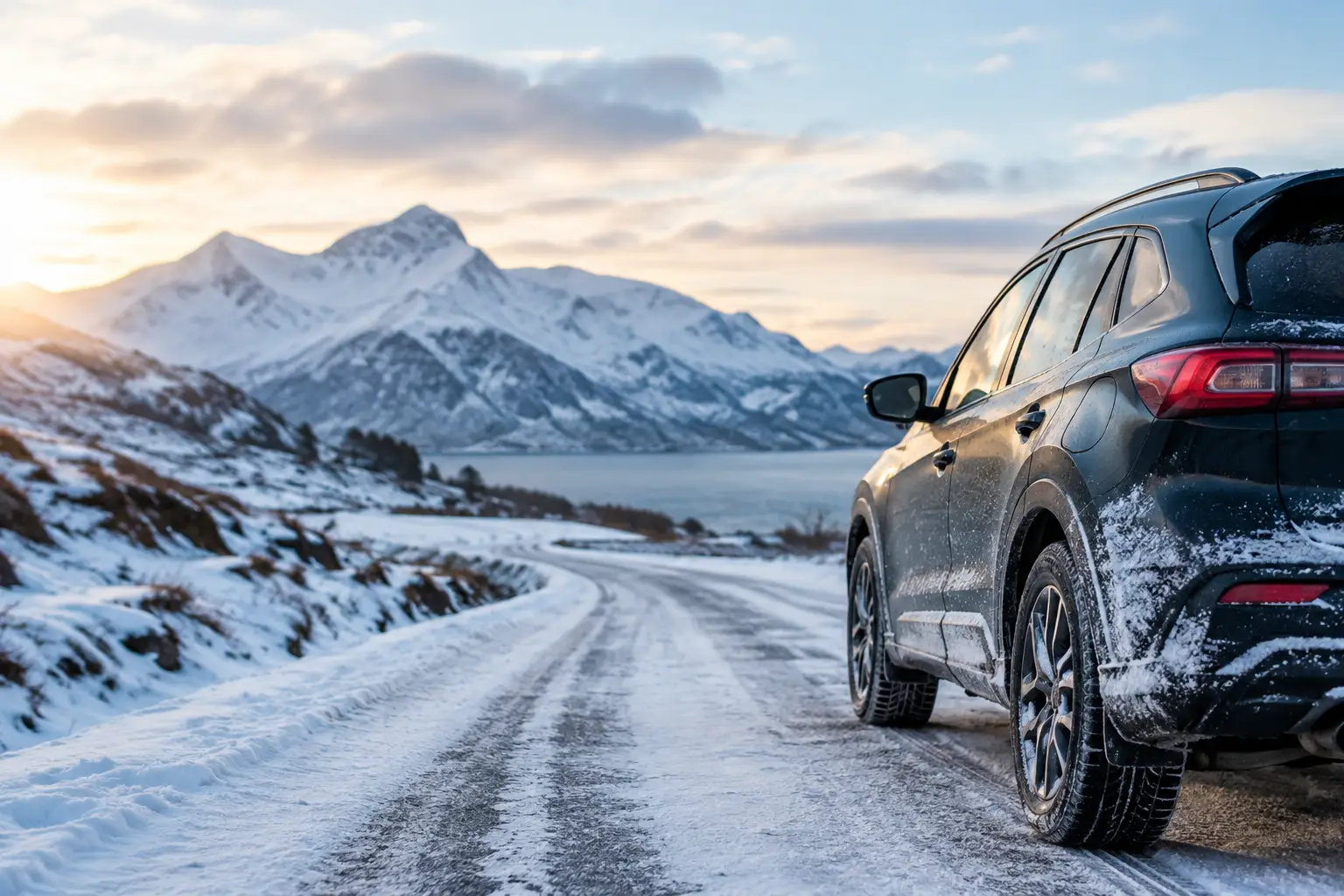
A winter journey in Scotland can change character remarkably quickly. A clear departure from Edinburgh may lead to standing water on the motorway, fog across the M90, or snow and ice on higher roads before the day is out. This Scotland winter driving guide is designed to help visitors and regular travellers make sensible decisions before setting off - and to recognise when postponing or leaving the driving to a professional is the safer option.
Scotland winter driving guide: start with the route
Scottish winter weather is rarely uniform. Conditions in a city, on the coast and through the Highlands can be entirely different on the same day. Rain, high winds and low visibility are common concerns throughout the season; snow and ice become more likely on higher ground and inland routes.
Check the full route, not just the weather at your departure point. Look at likely conditions at your destination, any high sections of road and the time you expect to travel. A route that is straightforward at 10am can be considerably less forgiving after dark, when temperatures fall and untreated minor roads may remain icy.
Official road-condition and weather updates should be checked close to departure, particularly when warnings are in place. Allow extra time without treating that as permission to hurry later. Winter delays are often caused by reduced visibility, surface water, wind restrictions or a collision ahead, rather than snow alone.
For longer trips, have a realistic alternative in mind. Major routes are generally prioritised for treatment, but that does not mean they are clear at every point or safe at normal speeds. A less direct route may be more exposed, while a shortcut on a rural B-road can become the least sensible choice after frost or heavy rain.
Prepare the vehicle before the weather arrives
The best time to discover a weak battery, worn tyre or empty screenwash reservoir is not at the side of a dark road. If you are hiring a car, take a few minutes to understand the lights, demisters, fuel type and controls before leaving the car park.
Tyres deserve particular attention. Check tread depth and pressures, including the spare if the vehicle has one. The UK legal minimum tread depth is 1.6mm, but winter driving calls for more margin than the legal minimum. Tyres with low tread clear water less effectively and make braking and steering less predictable on wet or slushy roads.
There is no general legal requirement to fit winter tyres in Scotland. They can, however, be a worthwhile choice for anyone who expects to drive regularly in cold, wet or snowy conditions. They are not a substitute for sound judgement. Four-wheel drive can help a vehicle move away on a slippery surface, but it does not shorten stopping distances or make corners safe at speed.
A modest winter kit is sensible, especially beyond built-up areas. Keep these items accessible rather than buried under luggage:
- a fully charged mobile phone and charging cable
- warm, waterproof layers and sturdy footwear
- drinking water and a small amount of food
- a torch, de-icer, ice scraper and warm blanket
- a first-aid kit and any essential medication
Also keep enough fuel for an unexpected diversion or stationary delay. Reaching a remote destination with the warning light on is avoidable pressure that no winter traveller needs.
Adjust how you drive, not only how long you allow
The speed limit is not a target in winter. Drive at a speed that allows you to stop safely within the distance you can see to be clear. In fog, darkness, spray or falling snow, that may be significantly below the posted limit.
Leave a much larger gap to the vehicle in front. On wet roads, stopping distances increase; on ice, they can increase dramatically. Gentle inputs make the car easier to control, so accelerate progressively, brake early and steer smoothly. Sudden braking, harsh steering and rapid changes of gear are more likely to unsettle the vehicle on a slippery surface.
Use dipped headlights when visibility is poor, even during daylight. Daytime running lights may not illuminate rear lights on every vehicle, which can make the car harder for traffic behind to see in heavy rain or mist. Use fog lights only when visibility is seriously reduced, then switch them off as soon as conditions improve to avoid dazzling other drivers.
Be particularly cautious on bridges, shaded stretches, entrances to roundabouts and roads that have not seen much traffic. These areas can freeze first or remain icy after surrounding surfaces appear clear. Black ice is difficult to spot, but a sudden glossy appearance, a drop in temperature and an exposed road should all prompt a calmer approach.
If the car begins to skid, avoid panicked reactions. Ease off the accelerator, look where you want the vehicle to go and steer smoothly. Braking hard or over-correcting can make matters worse. If you are not confident in these techniques, the safer decision is to avoid driving in conditions where they may be needed.
Know when conditions have moved beyond a sensible journey
Travellers can feel committed once accommodation, dinner reservations or meetings are booked. Yet winter road decisions should remain flexible. A yellow or amber weather warning does not automatically mean every journey must be cancelled, but it does justify more detailed checks and a cautious plan. A red warning, an official instruction to avoid travel, road closures or deteriorating visibility are clear reasons to reconsider.
Do not rely solely on sat-nav. Navigation systems may continue to suggest a route after conditions have changed, direct drivers on to untreated roads, or underestimate the impact of a closure. Follow signed diversions and local restrictions, even if they add time.
If you are caught in worsening conditions, turn back or stop somewhere safe before the situation becomes difficult. A well-lit service area, town or hotel car park is a better place to reassess than a narrow rural road. Never stop in a live lane unless an emergency makes it unavoidable.
There is a practical distinction between an inconvenient journey and an unsafe one. For a confident local driver in a properly prepared vehicle, rain and light frost may simply require more time. For a visitor unfamiliar with left-side driving, rural roads, winter darkness or Highland weather, the same journey may involve far more risk and stress.
Rural roads need a different mindset
Scotland's scenic roads reward patience in every season. In winter, they demand it. Many are narrow, unlit and without a hard shoulder. Passing places are designed for traffic to pass, not for parking or reversing long distances. If a faster vehicle catches up, pull into a safe passing place on the left where appropriate and allow it through.
Expect blind bends, livestock, deer and standing water. Deer are particularly active around dawn and dusk, and collisions can cause serious damage even at moderate speed. If an animal appears, brake firmly only if it is safe to do so and avoid swerving into oncoming traffic or a ditch.
Mobile signal can be inconsistent in more remote areas. Tell someone your intended route and expected arrival time, particularly if travelling alone. Download directions in advance where possible, but remember that a downloaded map does not confirm that a road is open or passable.
When pre-booked transport is the better choice
Driving yourself offers flexibility, but it also means carrying the full responsibility for changing conditions, parking, fatigue and unfamiliar roads. That trade-off matters after a flight, before an important meeting, or when travelling with family, luggage or valuable equipment.
For these journeys, a pre-booked professional driver can provide a calmer alternative. A licensed chauffeur is focused on the road, local conditions and route planning while you remain warm, rested and able to use the journey productively. AlbaGo can be particularly useful where punctuality and a dependable arrival matter more than the freedom of having a car outside the door.
This is not only a choice for severe weather. Winter darkness arrives early, and long-distance driving after a busy day can be tiring even when the roads are open. Choosing not to drive can be a measured decision, not an over-cautious one.
The most reliable winter travel plan is the one with room to change. Check conditions again before departure, keep expectations realistic and be willing to choose a later start, a different route or a professional driver when the road no longer justifies the risk.
Ready to book your journey?
Private chauffeur transfers and Highland tours from Edinburgh, booked online in minutes.
Book Online Instantly